
We see our Neighbor in the Mirror: Unbinding Love from Grudges

Our Query of the month:
How have I let go of grudges so that Love can flow through me overflowing into the life of my neighbor?
Is love my first motion?
Practical Application for South Jersey Friends:
This query invites us to ask in Meeting: What am I holding onto that blocks the flow of grace? If Love is the First Motion how is grace acting up on me? The neighbor for F/friends is not an abstraction; they are the person across the meeting room, the family member with whom we disagree, the stranger roaring past on the turnpike or going too slow on Route 38.
Releasing revenge is our prerequisite for an overflow of Love that Quaker worship expects can move through us out into the world.
For South Jersey Quakers, this query is not a demand for cheap absolution but an invitation to examine the blockages in our own pipes. Forgiveness, in this framework, is less an act of will and more a clearing of debris so that the Living Water can flow. Below I am offering three perspectives on the grudge: Psychological, Poetic, and Feminist.

South Jersey Quakers explores forgiveness this month.
In Freindship, as releasing grudges goes – so Love flows. We take a dive below into CJ Jung, JG Whittier, W Whitman, as well as womanist theological thought, and even Afrofuturism as we seek your consideration of a Query on neighbor-care.
How have I let go of grudges so that Love can flow through me overflowing into the life of my neighbor?
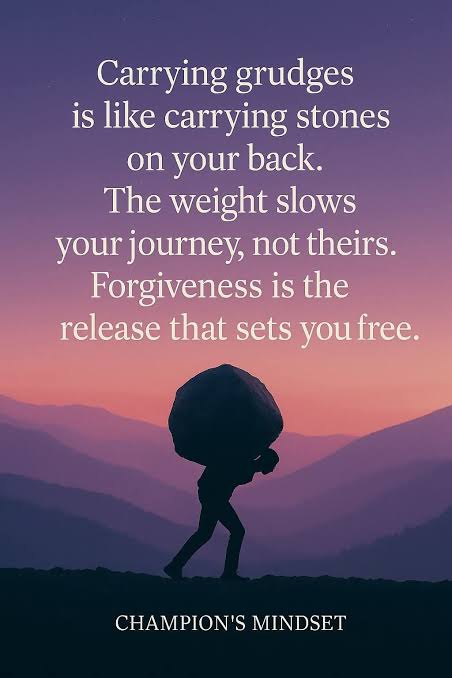
Psychological/Moral Integrity
Carl Jung observed how holding grudges often projects our unacknowledged shadow self onto the neighbor. Tension arises. The revenge mindset we often harbor is frequently a refusal, Jung thinks, to how we can better integrate our own capacity for harm; so we often externalize that pain.
Theologically, this aligns with a Levitical command: “Do not seek revenge or bear a grudge – love your neighbor as yourself.”
Integrity testimony, articulated by Wm Penn, insisted “Force may subdue, but Love gains: and he that forgives first, wins the laurel.” This isn’t passivity. It’s disciplined spiritual practicing of how we speak truth in love rather than papering over cracks!
Feelings from Quaker Poets
Poetry gives this internal work of releasing breath.
Whittier, our Quaker poet, confesses the terror of “mounting into heaven / On my neighbor unforgiven.”
He knew how much a grudge is a claim of self-righteousness that isolates us from our human siblinghood.
Whitman answers this feeling with expansive embrace:
“And that all the men ever born are also my brothers, and the women my sisters and lovers, / And that a kelson of the creation is love” .
For Whitman, the self is enlarged, not diminished, by receiving the living other.
Black Futurists – Feminist Liberation as a Health Tonic
Womanist thought grounds this love in the particular.
Delores Williams and Emilie Townes remind us that forgiveness for Black women is often a matter of survival and self-care, not merely relational nicety; it requires naming sin and injustice before release is possible. Forgiveness cannot be demanded of the wounded by the comfortable. An Afrocentric and Afrofuturist lens adds that letting go of revenge is not forgetting the harm but refusing to let it determine the future. Octavia Butler’s parables suggest that holding grudges is a failure of imagination—a refusal to imagine a world where the neighbor is not merely an enemy but a co-creator of the Beloved Community!!


Leave a Reply